Learn & play
What is the game with a name on your forehead?
If everybody can read the name on your forehead except you, you are probably thinking of Who Am I? Here is the game and how to recognize it.
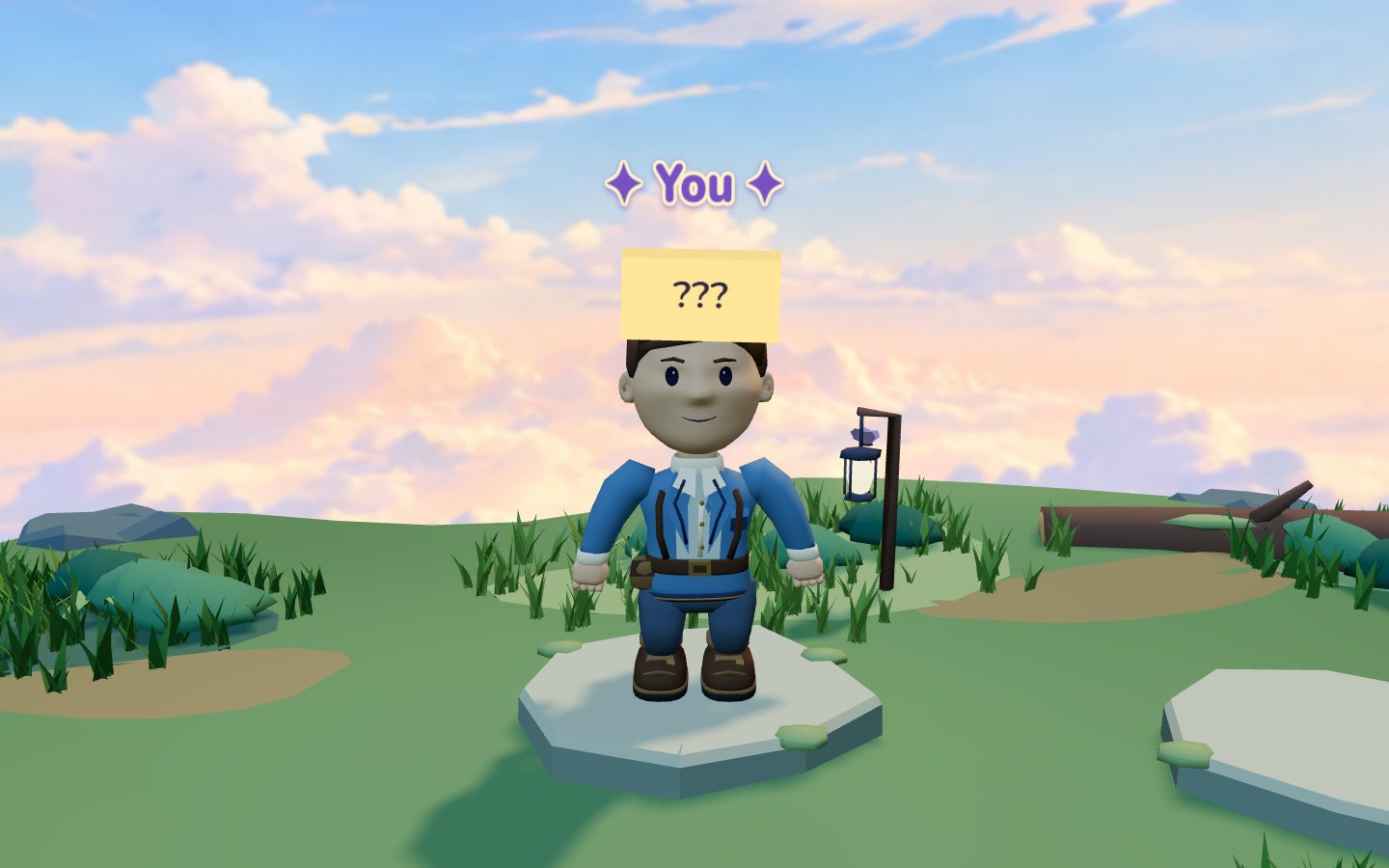
The game you are probably remembering
If every player has a name on their forehead that everyone else can see, the game is commonly called Who Am I? The player asks questions about that hidden identity and tries to discover the name from the answers. Paper, a card in a headband or a digital note can all serve the same purpose.
The defining feature is not the paper itself. It is the uneven information: the whole group knows your answer while you do not. You might have Einstein, a penguin or Tokyo, depending on the categories agreed for the round. Your friends answer your questions without simply reading out the name.
Other names people use
You may hear “forehead guessing game”, “name on your forehead game”, “sticky-note guessing game” or simply “Who Am I?” People often name it after the material they used as children. That does not imply they are all referring to one commercial set with one official rulebook.
In other languages, familiar names include Qui suis-je?, Wer bin ich? and Quem sou eu? Local versions can have different turn habits while sharing the same hidden-identity idea. When organizing a group, explain the mechanic rather than assuming everybody's childhood version used identical rules.
What happens during a round?
Someone chooses an identity for you without showing it to you. You take a turn asking a question that can be answered with yes or no. “Am I a real person?” or “Am I an animal?” gives you a starting category. Later you ask about a role, world or distinctive feature and make an exact guess.
Two familiar formats are one question per turn and continuing until an answer is no. Your group chooses its format before beginning. In many casual games, the first correct guess is celebrated and the remaining players keep trying until everyone has discovered their identity.
For an illustrated sequence of decisions, read how to play Who Am I?. You can understand the game without buying a branded box or memorizing a long set of rules. Fair names and clear answers matter more than specialized equipment.
How it differs from charades
In charades, another player knows the answer and acts it out for the group to guess, usually without speaking. In the hidden-forehead version of Who Am I?, you lead the investigation yourself by asking questions. The others answer instead of performing the identity for you.
Both can use the same names, which sometimes causes confusion. If a friend starts miming a wizard while you ask whether you are fictional, decide which game you intended. Acting can be a fun deliberate variation, but it supplies a different kind of clue from a yes-or-no answer.
How it differs from phone clue games
Some party games put a word on a phone held toward the group while friends shout descriptions or hints. The phone may sit near the player's forehead, so the setup looks similar. The key difference is whether the guesser asks restrictive questions or listens to freely supplied clues.
A timed stream of hints is not the same as patiently discovering one identity. Neither approach is better for every party. If you want a shared deduction puzzle, choose the question-led format; if you want fast description rounds, agree on that explicitly instead of mixing the rules mid-game.
How it differs from face-board guessing games
In a face-board game, players often select from a fixed set of visible portraits and eliminate options on a board. In Who Am I?, the candidate list may be open: any recognizable name from the allowed themes can appear. You therefore need to discover a broad category before selecting a specific identity.
Both involve questions, but the information available to the guesser is different. A question about glasses helps eliminate visible portraits. It may be much less useful when your hidden identity could be a country, animal or fictional character from outside a fixed picture set.
Which version suits your group?
For a family table, use familiar animals or characters with clear features. For friends who share a hobby, choose that topic while keeping every name recognizable to its recipient. For a group with mixed interests, use broader categories and a slower one-question turn rhythm.
If the group has trouble getting started, useful opening questions can help more than making the names easier at random. Once people understand the distinction between a category test and a direct guess, the game becomes much less intimidating.
Can you play it online?
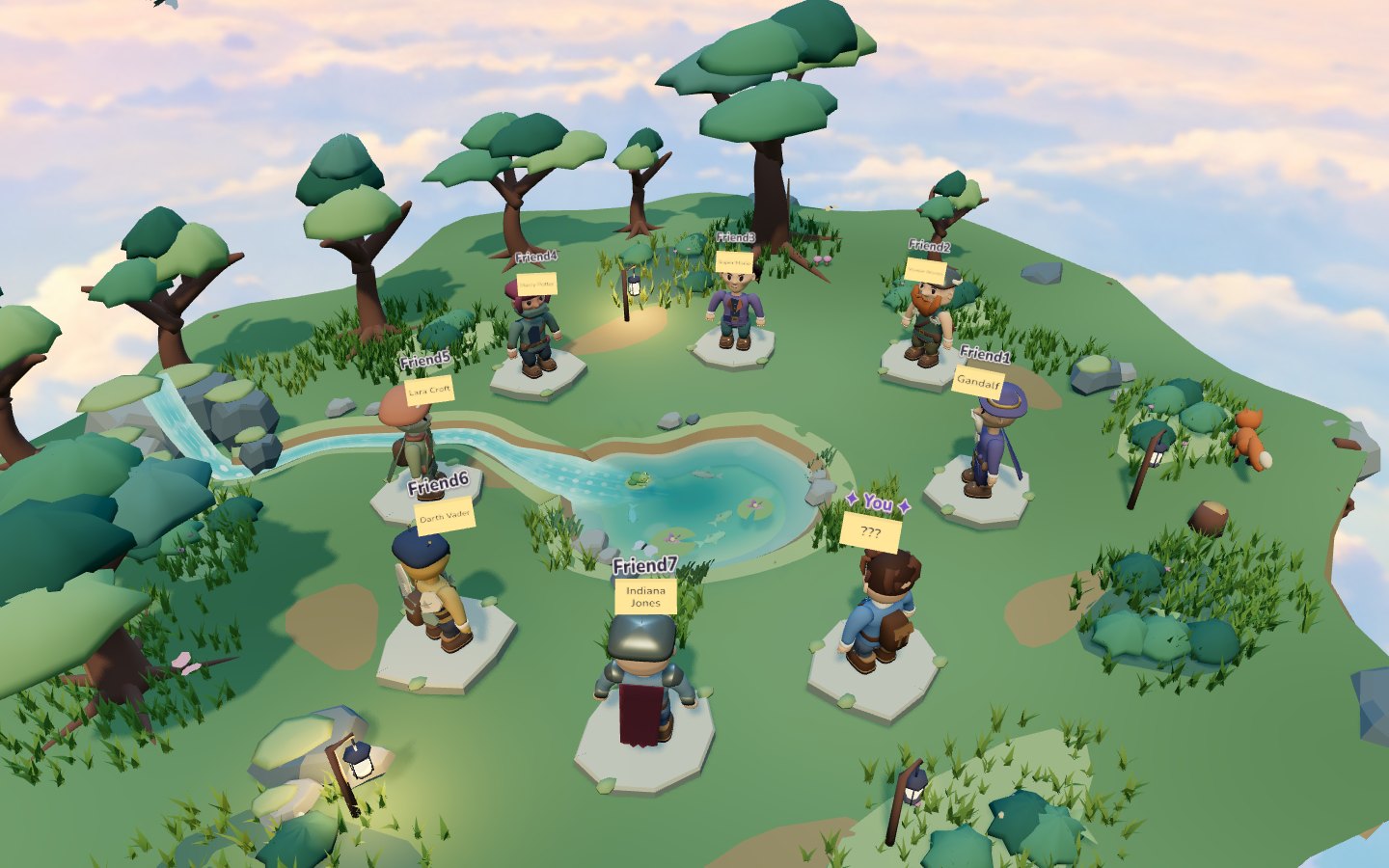
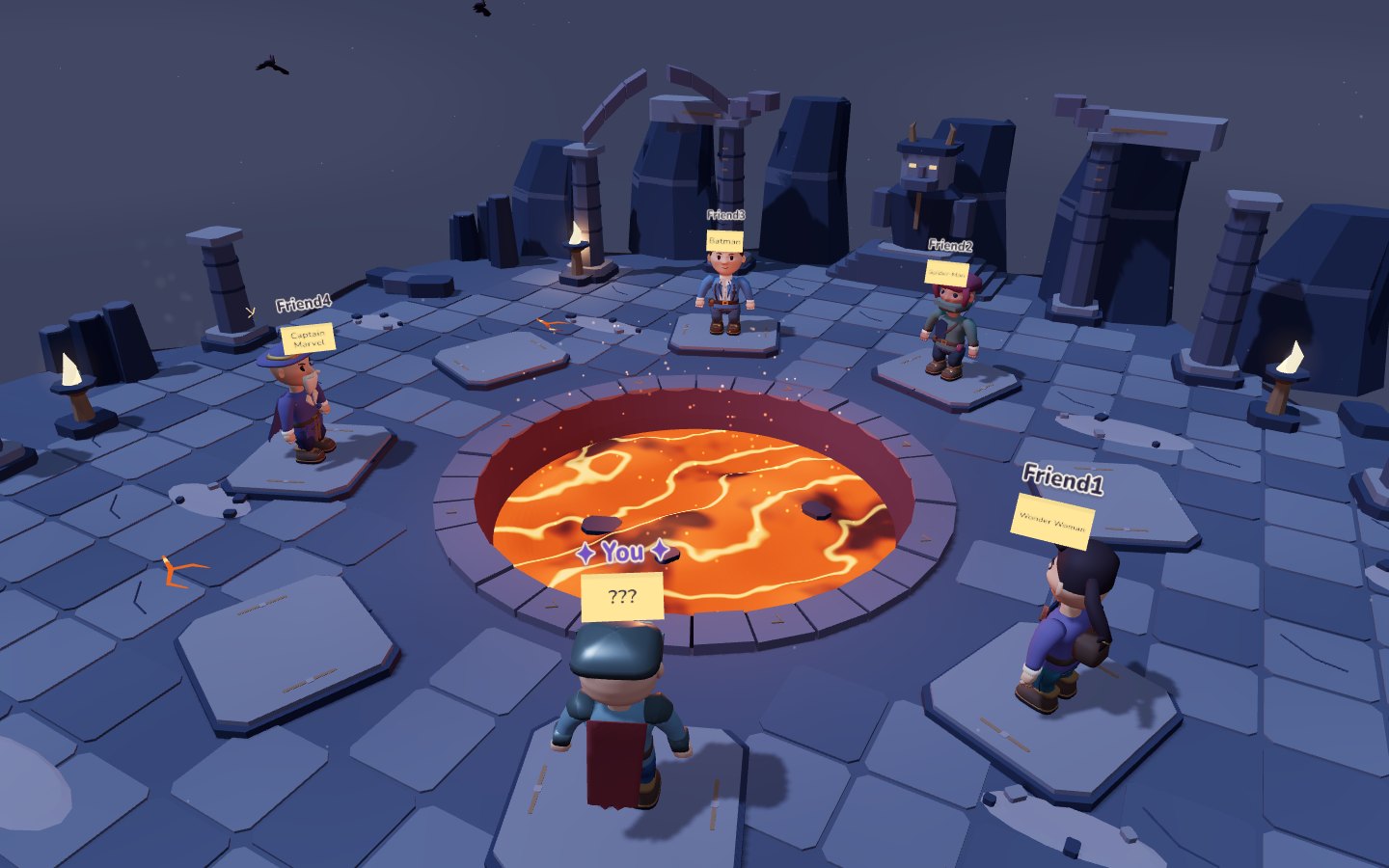
Yes: a browser version can show hidden names above avatars and organize turns. PostitGuess supports 2–8 players and provides Manual, Theme and Chaos assignment modes. You can choose names for friends, use one selected category or let mixed categories surprise the group.
Remote players supply their own separate voice call; there is no built-in voice chat. Friends sitting together can simply speak in the room. The same core puzzle remains: other people can see your name, and you need a few well-chosen questions to figure it out.